We may earn a commission when you shop through links in this article or on our store pages, at no extra cost to you.
You can miss a perfectly ordinary padel return, look down at the club's battered hire racket and start shopping before you've left the car park. A racket of your own would be nice. A racket that stopped you hitting the glass would be even nicer.
Then the shopping begins. There's a cheap Kuikma, a lighter Mantis, an Adidas with a reassuringly familiar logo and an expensive racket with a professional's name on it. Every description seems to promise control, comfort and power. You want to stop borrowing; suddenly you're trying to understand carbon layups.
The better place to begin is a smaller question: what bothers you about the racket you've actually played with? A slippery grip, a head that feels slow at the net and an unpredictable response are different problems. Buying the most discounted “advanced” racket is a fairly expensive way to avoid answering that question.
What is a padel racket?
It's a solid bat rather than a strung racket: shorter than a tennis racket but thicker and slightly heavier, made of foam with holes drilled through the hitting face. Padel bats come in three shapes (round, teardrop and diamond), and the LTA's beginner guide suggests a round one to start, because it offers the most control. If you haven't played yet, our first padel game guide covers the court, the rules and what to take.
Why are so many people buying one?
Because padel is one of the fastest-growing sports in Britain. The LTA said in May 2026 that one million people were playing, up from 15,000 in 2019, and in the UK "padel racket" is searched about 90,500 times a month, with "best padel racket for beginners" at about 1,600 (Google Keyword Planner, October 2026).
Why should you care what you pay?
Because a first racket is easy to overbuy. The four here run from £34.99 to £79.99, every listing promises control, comfort and power, and a stiff, expensive racket can ask more of a beginner's technique than a soft cheap one. The extra money only helps if it fixes something you've actually noticed on court.
The short answer: a hired racket does the job until you know padel will stick, and after that the right buy is the one that fixes a problem you've noticed. The Kuikma PR Comfort Soft is the lowest-cost option here, at £34.99 from Decathlon. Around £55, the Head Evo Speed offers a different shape and balance, while the Adidasadidasadidas sells sportswear, trainers and lifestyle clothing for men, women and kids, from running and football kit to Originals styles such as the Samba and Gazelle. Any live adidas cBuying guide · View store → Drive suits someone who likes a heavier round racket. The  MantisMantis SportThis is Mantis, a tennis and padel brand founded in London in 2000 and built for committed club and park players. You get rackets, balls, bags and apparel designed to help your gamBuying guide · View store → Play 335 Challenge has the lowest listed weight at £79.99. Prices were checked on 28 September 2026, and the sports shops we cover are on our Sports & Outdoors page.
The tempting fixes, and where they fall short
Hiring for longer. Good idea while you're deciding whether padel will become a habit. It helps to ask for the same model each time: changing rackets every session makes it harder to work out what you like. The LTA says clubs often provide equipment to borrow or rent. Your venue's arrangement is worth knowing before buying anything.
Hiring becomes less appealing when you play regularly and pay for it every time. The sum is simple with your own club's fee. At a hypothetical £4 per hire, nine sessions cost £36. That doesn't make buying compulsory, but it gives a £34.99 racket a job: a consistent, inexpensive piece of kit you can take to every game.
Buying what your better-playing friend uses. Borrowing it first is the cheap test. Their enthusiasm is useful; their preferences may be completely different. A racket that feels reassuring to someone with compact, reliable shots can feel cumbersome when you're still reacting late.
Buying a reduced pro model so you won't outgrow it. A discount changes the bill, not the racket. If you couldn't control it at full price, the clearance sticker hasn't fixed that. A previous-season racket can be excellent value once you've tried that exact model; buying an unfamiliar one because its original price was huge reverses the decision.
Buying the cheapest thing and replacing it quickly. Sometimes a sensible route, but planning the upgrade before you've played gets it backwards. If a modest racket helps you enjoy regular games, it is doing its job. The time to replace it is when you can describe what you want to change, rather than when you start feeling embarrassed by the badge.
What the coaching advice actually helps you understand
The LTA's beginner guide recommends starting with a round racket. That is a useful filter when you have no preferences yet. It cuts the shortlist down without asking you to diagnose your future playing style.
The Padel School's 2023 racket guide works through shape, weight, stiffness, surface and price. From 2:15, the coaches explain why a stiff racket requires reliable contact and swing speed to make use of its performance. At 3:08, they question whether a rough hitting surface deserves much weight in the buying decision. Their advice at 4:53 is practical: test the racket and see whether it suits you.
That is the useful shop-floor check. Shape and weight come first, then swinging the actual racket. A neat set of numbers can narrow your options; your hand still gets a vote.
The demonstration uses Bullpadel rackets. The same buying checks work on the four options below, and the two that fit your needs are the ones to try.
A few translations make the labels less intimidating:
Sweet spot:
the area of the face where contact feels cleanest. If you often hit away from the centre, forgiveness matters more than a promise of spectacular smashes.
Balance:
where the racket's weight is centred. A lower balance point puts it nearer your hand. The Kuikma lists 260mm; the Mantis lists 275mm. The Mantis is lighter overall, but its balance point is further up the racket.
Soft foam and fibreglass:
common ingredients in beginner models. They describe construction, not a universal comfort score. “Soft” on one brand's page isn't a standardised measurement you can compare directly with another's.
Carbon:
a material, not an instruction to upgrade. What you prefer about the racket in a rally matters more than paying extra for the word.
Reddit's useful disagreement: cheap first, or buy once?
In a January 2024 r/padel discussion about a first purchase, replies pull in two directions. Some recommend the Nox ML10 or X-One; others favour an inexpensive, soft racket from Decathlon. A round shape, manageable weight and comfort recur more often than agreement on a particular brand.
The interesting disagreement gets sharper in a May 2026 thread from a beginner with tennis and squash experience. They wanted a racket that would last as they improved, ideally under £70, with £100 possible. One reply suggests looking for older ML10 models on sale. Another says the ML10 felt heavier in use than its low-balance description led them to expect.
These are individual players' accounts, not a controlled comparison. Still, they expose the weakness in “Reddit says buy an ML10”: the same thread can contain a recommendation and a reason it might not suit you. Those comments are useful for building a demo list; they cannot tell you which racket will feel right in your hand.
And the Nox option? The ML10 Pro Cup belongs on the list for someone who has tried one and likes a heavier round racket. The version matters. The 2027 ML10 Pro Cup Coorp is listed for pre-order, at 360–375g, with a carbon frame and fibreglass face. Older Reddit recommendations don't establish how this new edition plays. Waiting for it or stretching a first-racket budget only makes sense if a demo gives you a compelling reason.
Four options, four different reasons to buy
What changes as you spend more?
Compare side by side. Scroll across to see every option.
| What matters | 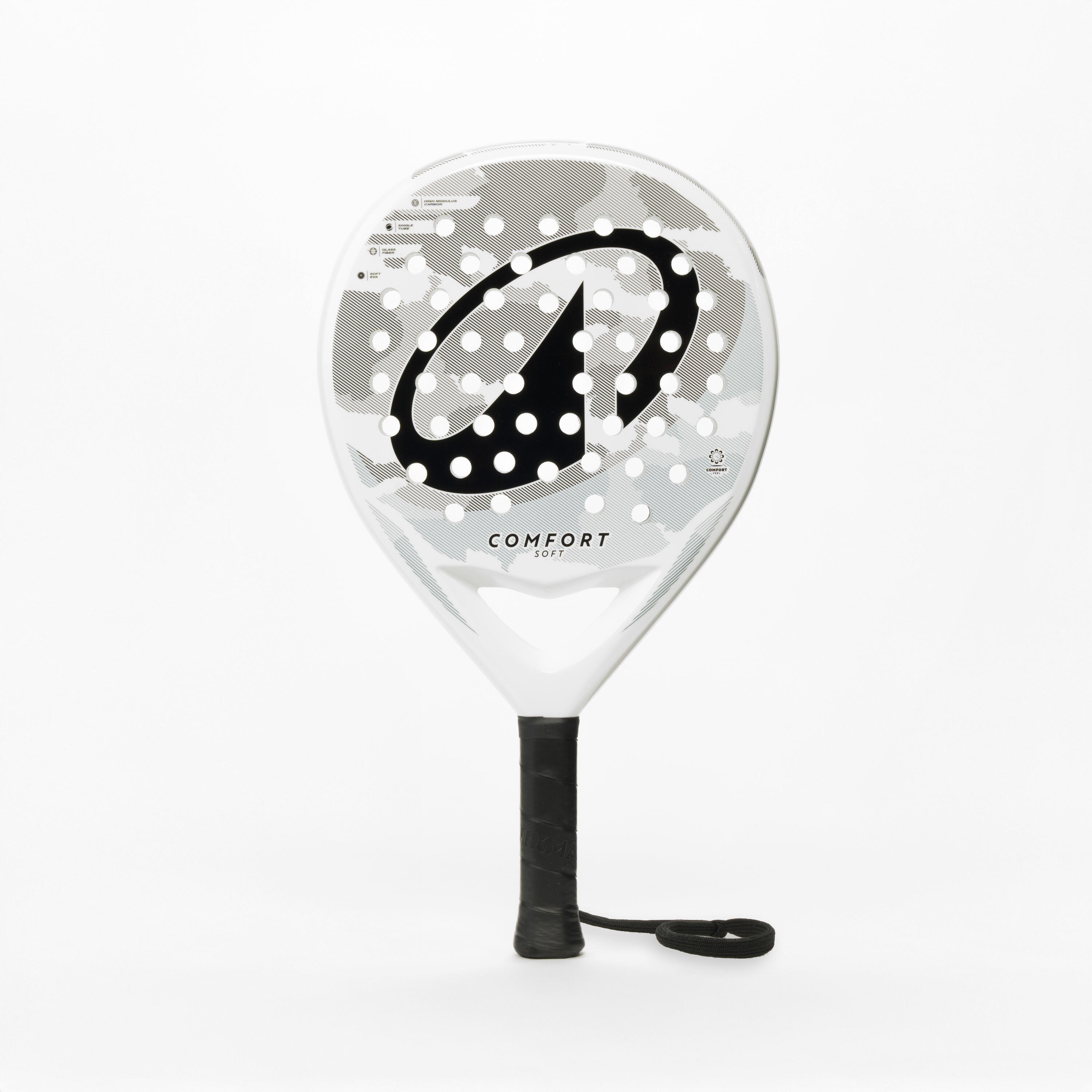 Kuikma PR Comfort Soft — black/white, 8928695 | 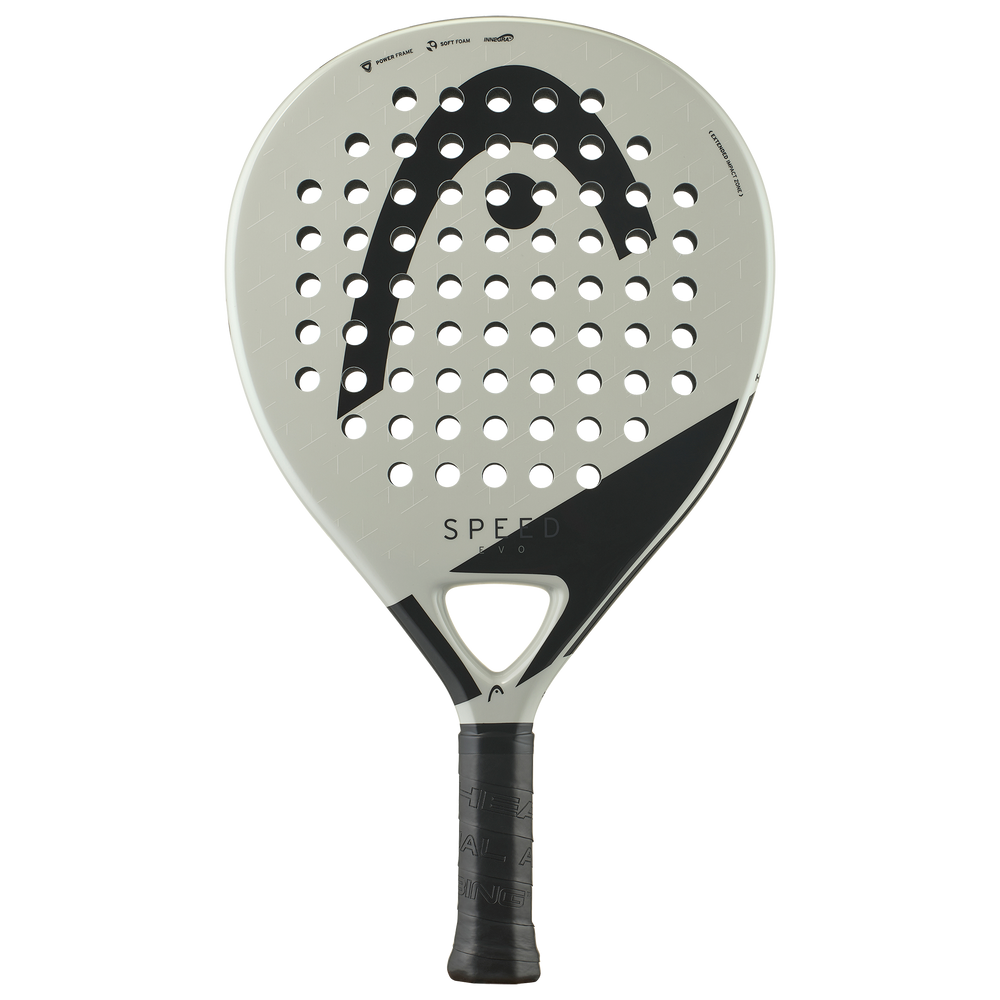 Head Evo Speed 2025 | 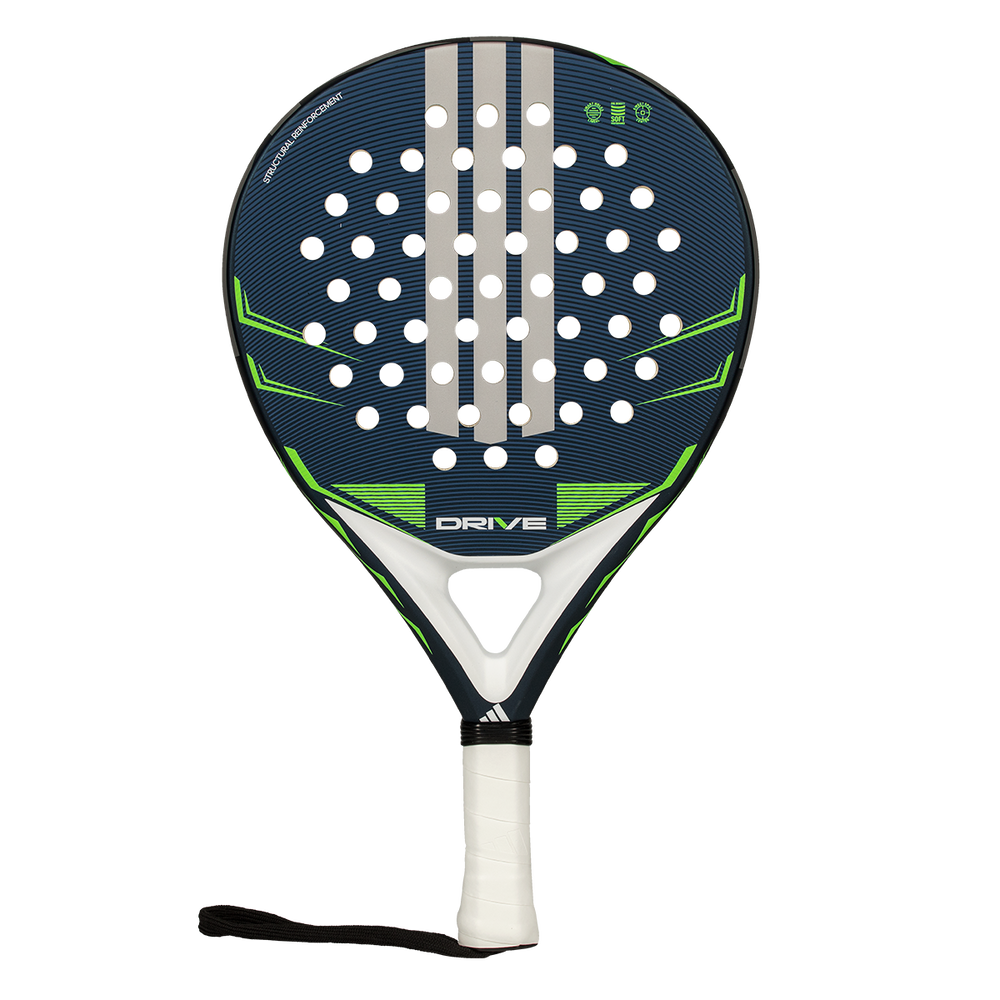 Adidas Drive 2026 — Blue/Lime, AR5CA3U71 | 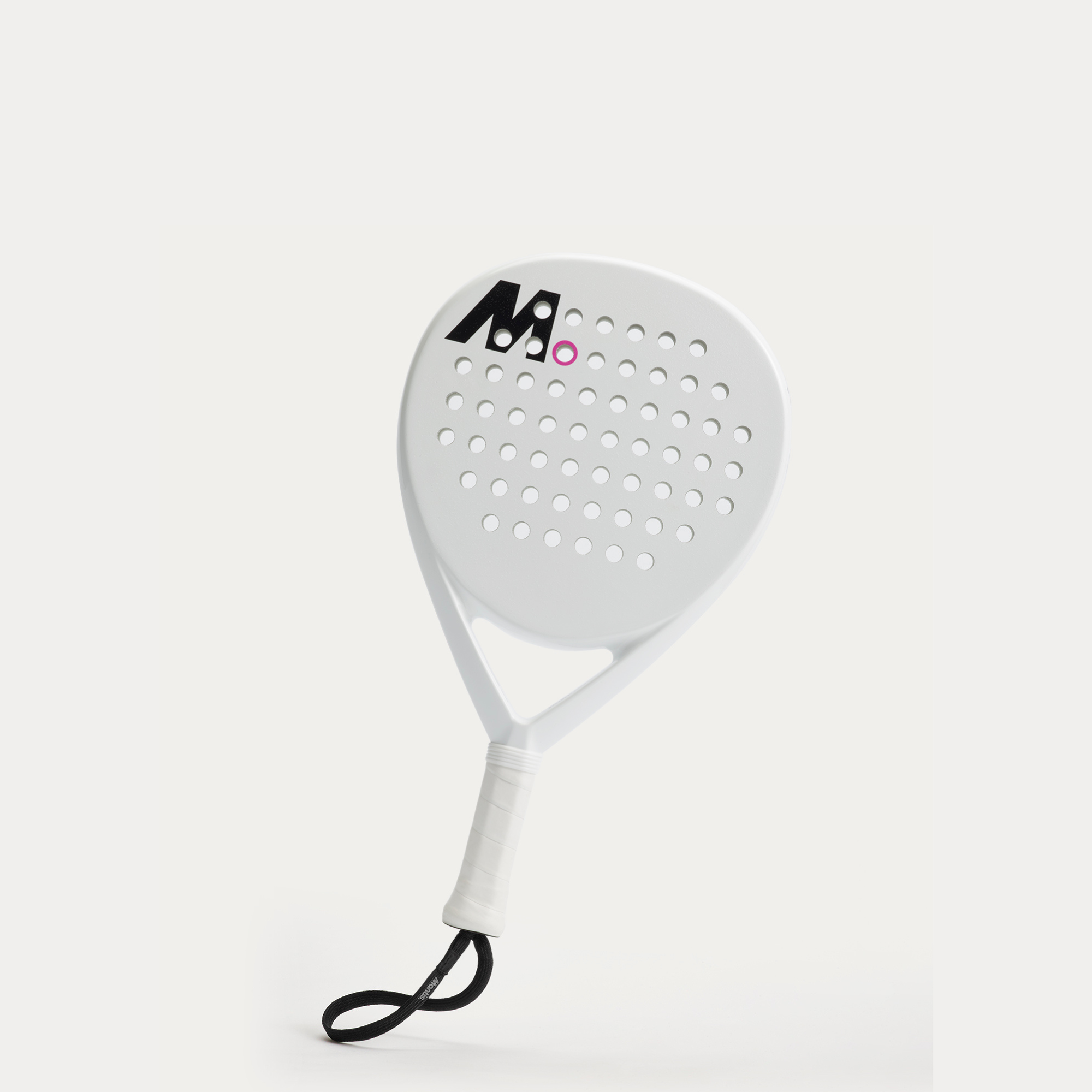 Mantis Play 335 ‘Challenge’ |
|---|---|---|---|---|
| Who it suits | For a new player keeping the purchase modest. Round shape and low balance; keep more of the budget for playing. | A different shape and balance to try beside the Kuikma. The extra £19 buys a different shape and balance; a demo can establish whether that suits you. | A round option for someone who has tried and enjoyed a heavier racket. Skip it if getting ready for volleys already feels slow. | The lightest listed option here. Worth the extra spend only if you prefer its feel in a demo; balance still matters. |
| Weight | 350g ±7g | 350g (retailer listing) | 360–375g | 335g |
| Shape | Round | Oversized teardrop | Round | Teardrop |
| Balance | 260mm | 270mm | Even | 275mm |
| Core | Soft EVA | Soft foam | EVA Soft Performance | Soft EVA Black 11 |
| Price & retailer | Check current priceDecathlonView product | Check current pricePDHSportsView product | Check current pricePDHSportsView product | Check current priceMantis SportView product |
Check the exact model, availability and delivery at the retailer. Prices are shown for seven days after a check.
The choice isn't a ladder where spending more automatically gets you a better first game. These options give you different combinations of cost, weight and shape. Prices were checked on 28 September 2026; compare delivery and the exact colour/model in the final basket.
Kuikma PR Comfort Soft: the lowest-cost way to own your kit
Decathlon's black-and-white model 8928695 was £34.99. Its round shape, 350g listed weight, low 260mm balance and soft EVA core make a coherent starting point for someone who wants an inexpensive racket of their own.
It suits someone who has enjoyed a few sessions, is still learning what good contact feels like and wants to preserve money for playing. The attraction is being able to make a modest purchase without also committing to an ambitious theory about your playing style.
It's less suited to someone who has already tried a soft racket and specifically dislikes its response. “Beginner” covers both someone new to all racket sports and someone bringing years of tennis or squash experience. They needn't make the same purchase.
Head Evo Speed 2025: the other shape to try around £55
At £53.99 from PDHSports, the Evo Speed 2025 gives you an oversized teardrop shape, a fibreglass hitting surface and soft foam. The retailer lists 350g and a head-heavy balance; Head's published balance figure is 270mm.
It's worth trying beside the Kuikma if the round racket feels unconvincing and you want a different weight distribution. The extra £19 is worthwhile when that difference makes ordinary returns feel better to you. Its shape is a reason to compare, not evidence that it will improve your shots.
The year matters when shopping: an older Evo Speed listing may describe different specifications.
Adidas Drive 2026: a round option for someone who likes more weight
The blue/lime Drive 2026, product code AR5CA3U71, was £54.49 at PDHSports. Adidas's official padel supplier lists a round head, even balance, fibreglass face and EVA Soft Performance core. Its 360–375g range is the key distinction.
It suits someone who has borrowed a heavier racket and enjoyed it, including a newcomer with racket-sport experience. It's less suited to anyone whose current complaint is that they struggle to get the racket ready for the next volley. A familiar brand doesn't resolve that mismatch.
This is the standard Drive. The Drive Light is a separate product, so the full name is the thing to match, not just the colour.
Mantis Play 335 Challenge: the lighter frame has to earn its price
The MantisMantis SportThis is Mantis, a tennis and padel brand founded in London in 2000 and built for committed club and park players. You get rackets, balls, bags and apparel designed to help your gamBuying guide · View store → Play 335 Challenge is £79.99, with a 335g listed weight, teardrop shape and 275mm balance. The face combines fibreglass and carbon; the core is Soft EVA Black 11. It is the lightest listed racket in this shortlist.
That makes it an interesting demo for someone who wants less overall weight. It doesn't settle how quickly the racket will move in your hand: the balance point sits further from the handle than the Kuikma's. Their ordinary returns and volleys side by side show how much the lower scale weight matters.
The Mantis costs £45 more than the Kuikma, so its lighter construction needs to deliver a difference you actually prefer in play. Carbon content alone does not establish that. If it does suit you, our Mantis store guideMantis SportThis is Mantis, a tennis and padel brand founded in London in 2000 and built for committed club and park players. You get rackets, balls, bags and apparel designed to help your gamBuying guide · View store → covers the range and shopping details.
Buying used can work, but inspect the actual racket
A used racket from someone at your club can be a useful middle route: you may be able to play with it, ask about its history and agree a price without gambling on a stranger's description. That gives you much more to judge than a heavily used premium model's former retail price.
Clear photographs of both faces, the edge, the holes and the handle are the minimum. Cracks or damage around the frame and holes are the warning signs, and the wrist strap is worth a look too. If you can't tell whether a mark is cosmetic, someone experienced can. An overgrip can be replaced; it won't repair a damaged frame.
The used price needs comparing with a suitable new beginner racket, including delivery. A small saving loses its appeal quickly if you cannot inspect the condition or return a misdescribed purchase.
A demo that makes the differences easier to judge
A proper demo from the club or shop is worth asking for, with the same partner, similar feeds and the same balls for each racket. The comparison works best when it's deliberately unglamorous:
Gentle forehands and backhands: can you keep a rally going without forcing the shot?
Controlled volleys: can you return to a ready position comfortably?
A few lobs and ordinary defensive returns: do you like the response when you aren't swinging hard?
The grip: does it feel secure without you constantly readjusting your hand?
The same again after you've warmed up. One lovely smash is poor evidence for a purchase you will use on every shot.
If the difference is hard to describe, the cheaper racket preserves more of your budget. If one feels clearly better across those ordinary shots, that preference gives the extra spend a purpose. If both feel awkward, a coach looking at your grip and preparation is a better buy than a third racket.
A demo isn't a return. PDHSports excludes padel rackets from its ten-day trial, although it invites customers to ask about seasonal demos at its Derbyshire showroom. Its product pages also say that removing the handle wrapper rules out a full refund. A demo is the way to test before buying; a normal online order isn't permission to test the racket on court.
Which purchase fits which problem?
Still trying padel: hiring or borrowing, and another game in the diary. Our beginner padel guide covers the first booking and what to take.
Playing regularly, no strong racket preference: the Kuikma PR Comfort Soft keeps the purchase modest, leaving more for court time or coaching. It answers the immediate problem (having consistent kit of your own) at the lowest checked price here.
You already know what you dislike: the relevant alternative, on a demo. That's the Head for a different shape and balance around £55, the Adidas if you like a heavier round racket, and the MantisMantis SportThis is Mantis, a tennis and padel brand founded in London in 2000 and built for committed club and park players. You get rackets, balls, bags and apparel designed to help your gamBuying guide · View store → if you prefer its lighter construction in play. The Nox becomes interesting once you have a reason to want that particular version and weight.
A useful first racket is one you can enjoy a whole game with. The time for the next one is when you can name a limitation another model would solve; a new release or a bigger discount is not a limitation.