What is Comp AI and who is it for?
Comp AI is a compliance automation platform for software companies that need a SOC 2 report or an ISO 27001 certificate, usually because a large customer has asked for one. It prepares the company for the audit; an independent auditor still carries out the audit and writes the report.
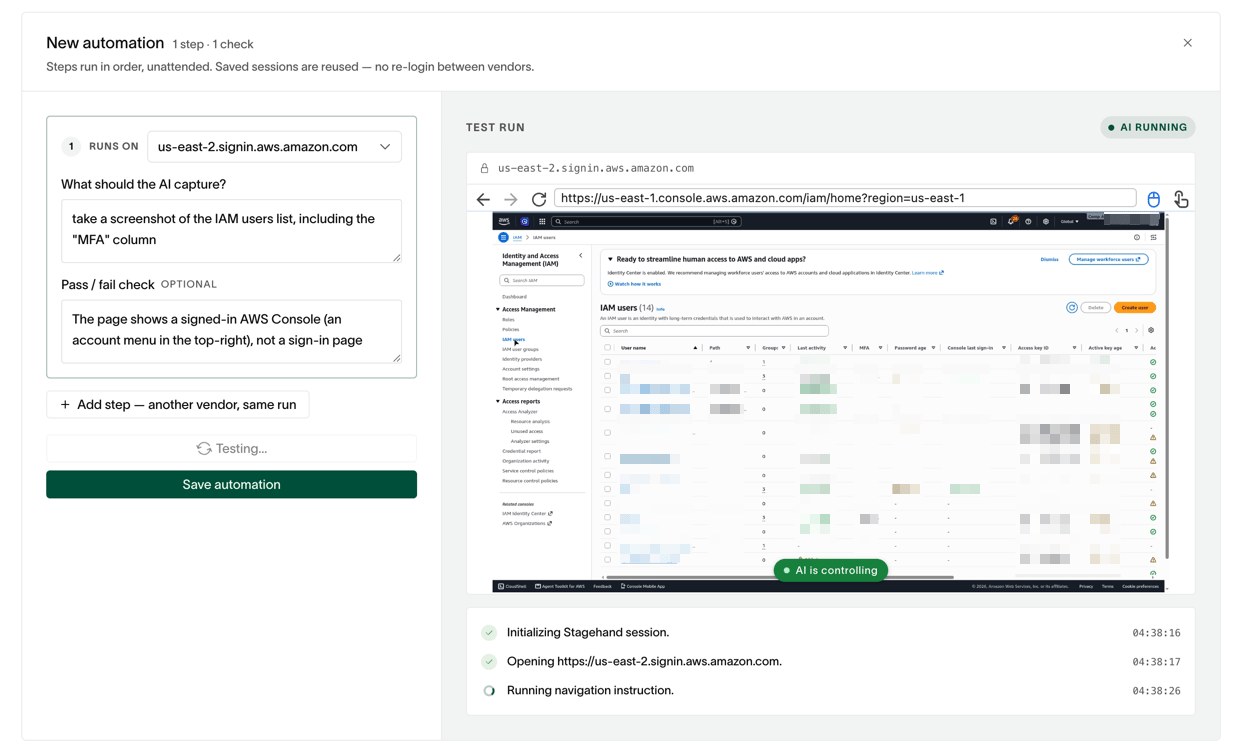
After onboarding questions about the business and its tools, Comp AI drafts the policies, maps them to controls and connects to systems such as AWS, Azure, Google Cloud, GitHub and Google Workspace to collect evidence automatically. A desktop agent checks that staff laptops have disk encryption, antivirus, a password policy and screen lock. Browser automations can sign in to tools that have no integration and capture dated screenshots as evidence. Comp AI says customers become ready for a SOC 2 Type I audit in about 10 days on average, depending on how much is already in place.
How much does Comp AI cost in the UK?
Comp AI doesn't publish prices. Each quote depends on the frameworks in scope, headcount, the deadline and whether the audit, a penetration test and the trust centre are included, and it is given on a 20-minute call.
The terms of service state that fees are in US dollars, exclude taxes, and carry a minimum 12-month commitment whether billing is monthly, quarterly or annual. Subscriptions renew for another year unless notice is given at least 30 days before the end of the term. For UK buyers, that means a dollar invoice and a sterling cost that moves with the exchange rate; the pricing page doesn't mention VAT or pound prices. Comp AI's own SOC 2 cost guide says the audit, penetration test, extra frameworks, user seats and setup are included in its pricing, which is worth confirming line by line in any quote.
Comp AI vs Vanta and Drata: which is better?
Comp AI is the younger and more open option; Vanta and Drata are larger, longer-established platforms with far more reviews and auditor familiarity.
Comp AI's differences are its open-source code (AGPLv3, on GitHub), the option to self-host, bundled audits and penetration tests, and support through a shared Slack channel. On the other side, Vanta and Drata are longer established, and independent reviewers advise checking that a chosen auditor is happy to work from Comp AI before signing. Secureframe and Sprinto are other established alternatives.
Is Comp AI safe to trust with your security data?
Comp AI states that data is encrypted at rest with AES-256 and in transit with TLS, and that integration credentials are encrypted again before storage. Its own trust centre lists SOC 2, ISO 27001 and GDPR status.
Its published sub-processors (AWS, Vercel, Stripe, Anthropic and OpenAI) are all listed in the United States, and no UK or EU hosting option is mentioned, which matters for UK GDPR transfer checks. Comp AI says its AI providers may not train on customer data. Cloud connections are read-only by default: AWS changes need a separate role and a person pressing Fix. Because the code is public, a security team can read exactly what the agents and integrations do.
Is Comp AI free if you self-host it?
The core platform is open source and can be run on your own servers with Docker, so there is no licence fee for that route. A small enterprise part of the code sits under a commercial licence.
Self-hosting needs an external PostgreSQL database, a Resend account for email and a Trigger.dev account for background jobs, plus someone to handle updates, backups and uptime. It also doesn't include the auditor, penetration tests or the expert support that come with the paid service.
How do you get Comp AI cheaper?
The main lever is scope: a quote for one framework costs less than several, and Comp AI says adding ISO 27001 to an existing SOC 2 programme starts about two-thirds done because controls overlap.
- Comparing the quote with Vanta, Drata or Secureframe quotes for the same scope.
- Checking whether the audit and penetration test are bundled, since they are often the largest separate costs.
- Self-hosting the open-source version when only the software is needed.
No student, non-profit or startup discount is published, and no free trial is listed on the pricing page.