
We may earn a commission when you shop through links in this article or on our store pages, at no extra cost to you.
The government's Be Ready campaign launched on 22 October 2026 with a plain idea: keep a household's own store of bottled water, food that keeps and a few basics, so it can manage for three days if power or water goes off while support reaches those most in need. That might have sounded distant if all you caught was a headline about supplies. Then, the next day, Storm Austen left more than 10,000 homes without power in southern England and Wales. The question suddenly had a less abstract shape: what would still work in your home if the usual services did not?
The answer is not a cupboard full of specialist gear. Be Ready describes a modest store of essentials and a plan for the people who need help, assembled over time. Its advice is easier to judge once you know who is giving it, why three days is the chosen span, and where real interruptions have exposed the gaps.
What the government is asking
Be Ready is the first stage of a three-year Cabinet Office campaign about coping with emergencies such as severe weather. In a statement to Parliament, ministers set out two key actions for households: join the Priority Services Register if eligible, and have three days of bottled water and food that does not go off at home. The register gives eligible people extra support from utility companies during an interruption. It is free, and households with children under five are among those who may qualify. Northern Ireland has Customer Care Registers for people who need additional support.
The campaign's own phrase is "3 days". It is a household planning horizon, with time for support to reach those most in need, rather than an announcement of a particular threat. The government has published resilience advice for households since May 2024; the launch gives that advice a wider campaign. Nor does the government ask people to clear a shelf in one trip. Its checklist says to pick up missing items gradually during regular shopping. A Welsh government statement makes the same point about not buying large quantities at once. That is a more useful way to read the request than the word "stockpile" in some headlines.
The list goes beyond food and water because an outage can take several conveniences at once: power, heating, home internet and even gas ovens or boilers. The campaign includes a safe light, a way to hear updates, a charged way to keep a phone going, warmth, first aid, medicines, cash and information on paper. The detail changes with the household. Security Minister Dan Jarvis said "Those who can follow this advice should follow this advice." That wording leaves room for the obvious reality that space, money and medical needs differ.
ITV News set out the new guidance the day after the launch; this video gives the campaign's request in the language people heard that week.
Why three days feels less abstract
There is a measurable gap between knowing emergencies happen and feeling ready to manage one. In the 2026 UK resilience survey of 10,791 adults, 13% said their household was largely or totally prepared, unchanged from 2025. Half said they were slightly or not at all prepared. The water finding is starker: only 4% reported enough bottled water for three days at the recommended amount, while 35% had less than a litre at home. Those are survey responses, not a count of what is in every cupboard, but they explain the campaign's emphasis.
The timing has prompted a fair question about whether officials know of a particular danger. Defence Secretary Wes Streeting told the BBC the advice was not triggered by any "particular piece of intelligence". Streeting said the government wanted "people to be alert but not alarmed". Prime Minister Andy Burnham said: "It's not about panicking... It's about just taking sensible measures to have enough in the house to tide you over should there be a difficult situation." That is a case for preparing for an interruption, not a prediction of one.
The UK campaign is in line with advice from European peers. The European Commission's preparedness strategy asks people to maintain essentials for a minimum of 72 hours. The Netherlands plans for the first 72 hours, Finland advises at least three days, and Sweden asks households to prepare for at least a week. Ready Scotland already lists three days of water and food that needs no cooking. These are different national guides, with different quantities and time spans, rather than a single European shopping list.
Recent outages show why a few days is a practical span. Storm Éowyn affected 285,000 households and businesses in Northern Ireland in January 2025; almost 300,000 customers lost power in Scotland, with restoration taking six days for all properties. The Iberian blackout in April 2025 took until after midnight to restore the transmission grid in Portugal and until about 04:00 the next morning in Spain. Water can be slower still: properties around Tunbridge Wells were without supplies from 29 November until most returned by 4 December 2025, and more than 30,000 homes in Sussex and Kent were affected by South East Water interruptions in January 2026.
Then came Storm Austen. The BBC reported strong winds and heavy rain battering southern England and Wales on 23 October, with more than 10,000 homes without power. The storm does not explain why the campaign was launched the previous day. It does show what its plain question looks like when the lights go off. A phone can be charged, yet a home can still lack heat or news; a kitchen can be full of food, yet short of drinking water.
The first poll asks how long your household could manage with what it already has, before any shopping enters the picture.
Water is the awkward part
The Be Ready amount is 3 litres per person per day for drinking, for three days. That is 9 litres per person before cooking, washing or pets. It sounds manageable until the bottles have to fit somewhere. In common six-packs of 2-litre bottles, the drinking calculation looks like this:
| Household | Drinking water for three days | Six-packs of 2 litres |
|---|---|---|
| 1 person | 9 litres | 1 (12 litres) |
| 2 people | 18 litres | 2 (24 litres) |
| 4 people | 36 litres | 3 (36 litres) |
I'd sort the water first because the survey found 82% had less than one day's bottled supply, and a radio cannot fill that gap. The government calls bottled water the safest preparation for an outage. Finding room for it is a real constraint. "Absolutely no chance we have anywhere to store that much water," one person wrote about a two-person supply. Other people in the AskUK discussion described using a cupboard or the space behind a bath panel, then drinking and replacing the bottles.
That discussion also gets to the part a drinking-water sum misses: a household without running water still needs to flush. Bristol Water advises that a bucket of water poured into the bowl can flush a toilet, while Be Ready says rainwater is for flushing or plants, not drinking. One AskUK commenter said the worst part of a week without water was not being able to flush. If the interruption lasts longer, collecting alternative supplies may be another problem; the Priority Services Register matters especially for people who cannot carry water.
The Reddit discussion below shows how people are making space for water and what a longer interruption felt like to someone who had one.
Where the full bottled amount cannot fit, Be Ready describes boiling water from other sources or using purification tablets. Those options depend on the circumstances and a safe way to heat water. I would still make room for some bottles. They are the option the campaign puts first, and a loss of power and water together is precisely when a plan that depends on the cooker becomes fragile.
Food without the cooker
Food is less likely to be the empty shelf. Sixty per cent of survey respondents said they had roughly three days of non-perishable food that needs no cooking. The Be Ready list suggests tinned meat, fish or vegetables, dried fruit and nuts, with a sensible preference for food you normally eat. If it is part of ordinary meals, it can be used and replaced instead of becoming an untouched emergency menu.
There is a small catch in any plan built around tins. The household emergency plan adds a tin opener, although the web essentials list does not name one. Cold food also avoids relying on a stove when power or gas service is interrupted. According to the Food Standards Agency, a closed fridge can stay cold for up to four hours, a full freezer for up to 48 hours and a half-full one for up to 24 hours. Chilled food may be useful first while it remains safe.
I would not buy a camping stove just to make this short plan feel more complete. The NHS warns against using barbecues or camping stoves indoors because of carbon monoxide. A cupboard of food that can be eaten cold is a simpler answer to a power cut. The point is sustenance that still works when the kitchen appliances do not.
Light, news and a working phone
A dark home raises a different set of decisions. Be Ready says "Torches are safer than candles." Fifty-three per cent of survey respondents already had a battery, solar or wind-up torch. The useful question is whether the one you have can be found and powered when needed. A head torch leaves both hands free for stairs or a tin opener; a lantern lights a room. Batteries should match the devices they are meant to serve.
The first shopping grid puts  EasylifeEasylifeEasylife is a UK catalogue retailer built around practical products for the home, garden, mobility and motoring. Its range leans towards everyday problem-solving, from heated airer1 current offer · View store → torches beside
 JoybuyJoybuyJoybuy is the European online retail arm of JD.com, and its UK site brings together a brand-led range spanning technology, appliances, beauty, homeware, groceries and everyday esse12 current offers · View store → batteries and a charger, so the power source is part of the choice.
Torches and batteries
 US Army Torch +1 FREE£14.99
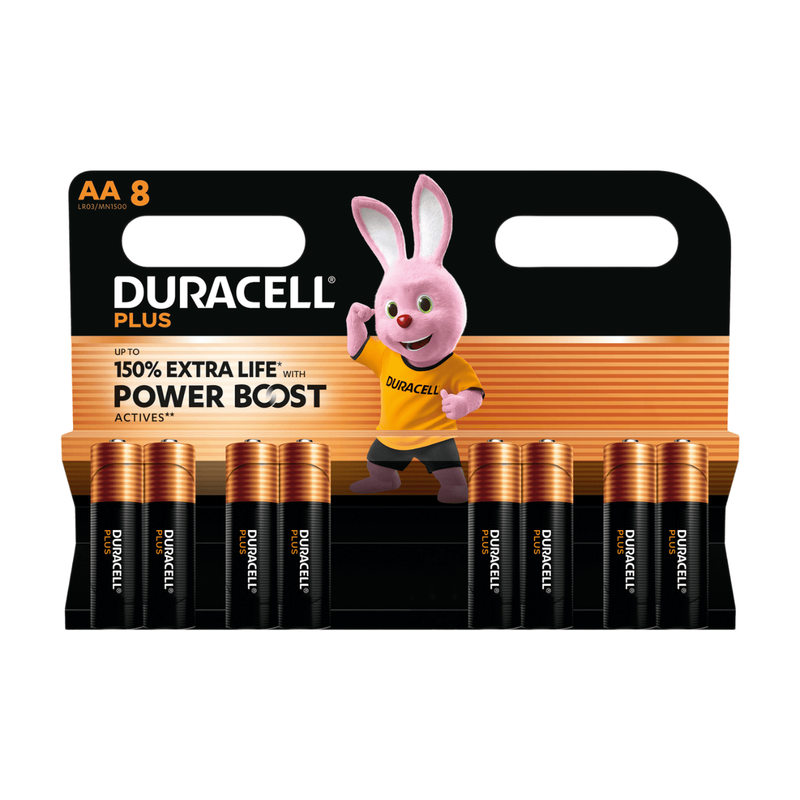 SaleDuracell Plus Power AA Batteries, 8-Pack | Long-Lasting Alkaline Battery, Reliable Power for All Your Devices£7.39£9
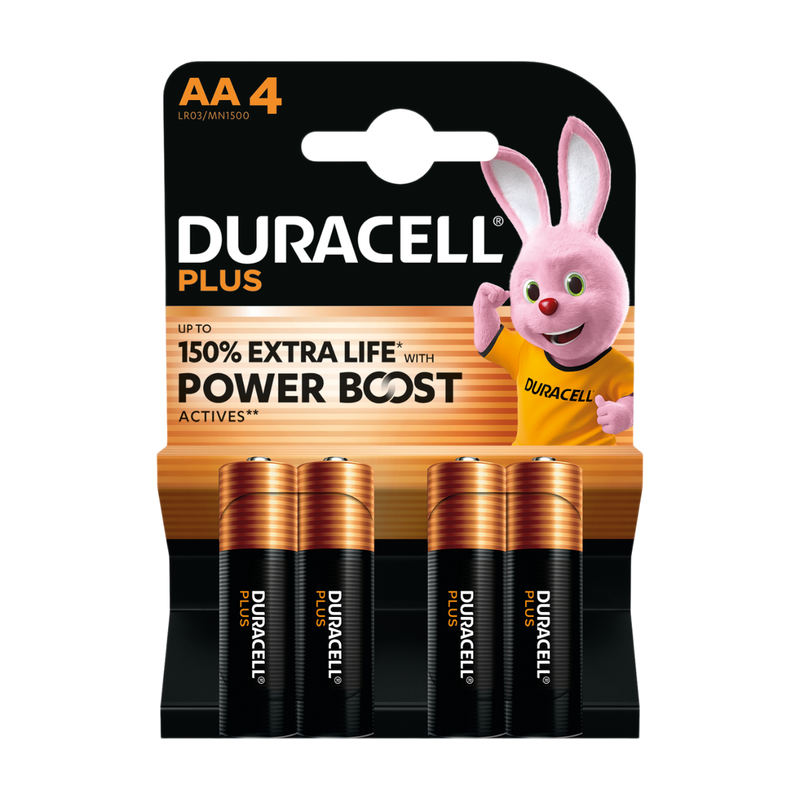 Duracell Plus Power AA Batteries (Pack of 4) | High-Performance Alkaline Batteries for Long-Lasting Device Power£5
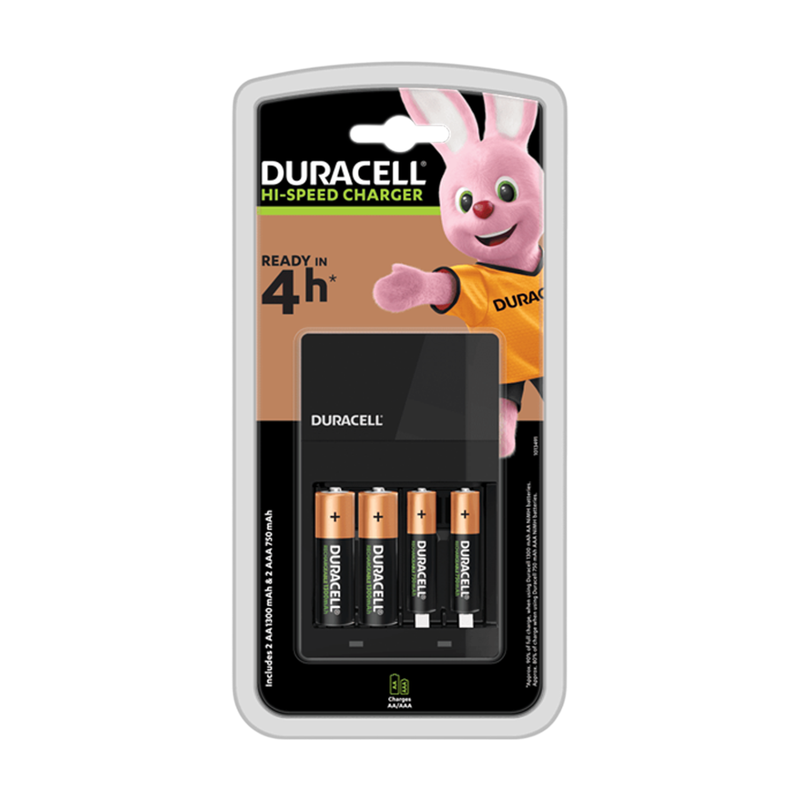 SaleDuracell 4-Hour Battery Charger CEF14 with 4 AA & AAA Rechargeable Batteries - UK Plug for Power Banks£13.99£16.50
Once the room is lit, there is still the question of what is happening outside it. Only 23% of survey respondents had an FM radio that worked without mains power. Be Ready recommends a battery or wind-up FM set and the frequencies of national or local news stations written down. I would choose a simple battery model for emergency updates before paying more for a crank. A wind-up handle is one way of providing power, not the reason the radio is useful.
The Bush FM pocket radio at Argos was £9.99 in October 2026, with up to 10 hours on two AAA batteries that are not included. A radio that also gets regular use might justify more. The next grid shows  Sonic DirectSonic DirectSonic Direct is an online discount retailer focused on home appliances. Its range, as described by the merchant, centres on branded domestic appliances, small kitchen and householdBuying guide · View store →,
 HughesHughesHughes is a family-run electrical retailer from East Anglia that sells across mainland UK online. Its strengths are big white goods, where delivery and installation can be booked i15 current offers · View store → and
 ElectricshopElectricshopElectricshop is an online retailer of home appliances, televisions, hi-fi, home audio and wireless music systems, stocking a mix of well-known brands. Because the range spans large15 current offers · View store → Roberts models that can run on batteries; their power arrangements differ, so the choice is about how the set will be used between outages too.
Roberts radios that run on batteries
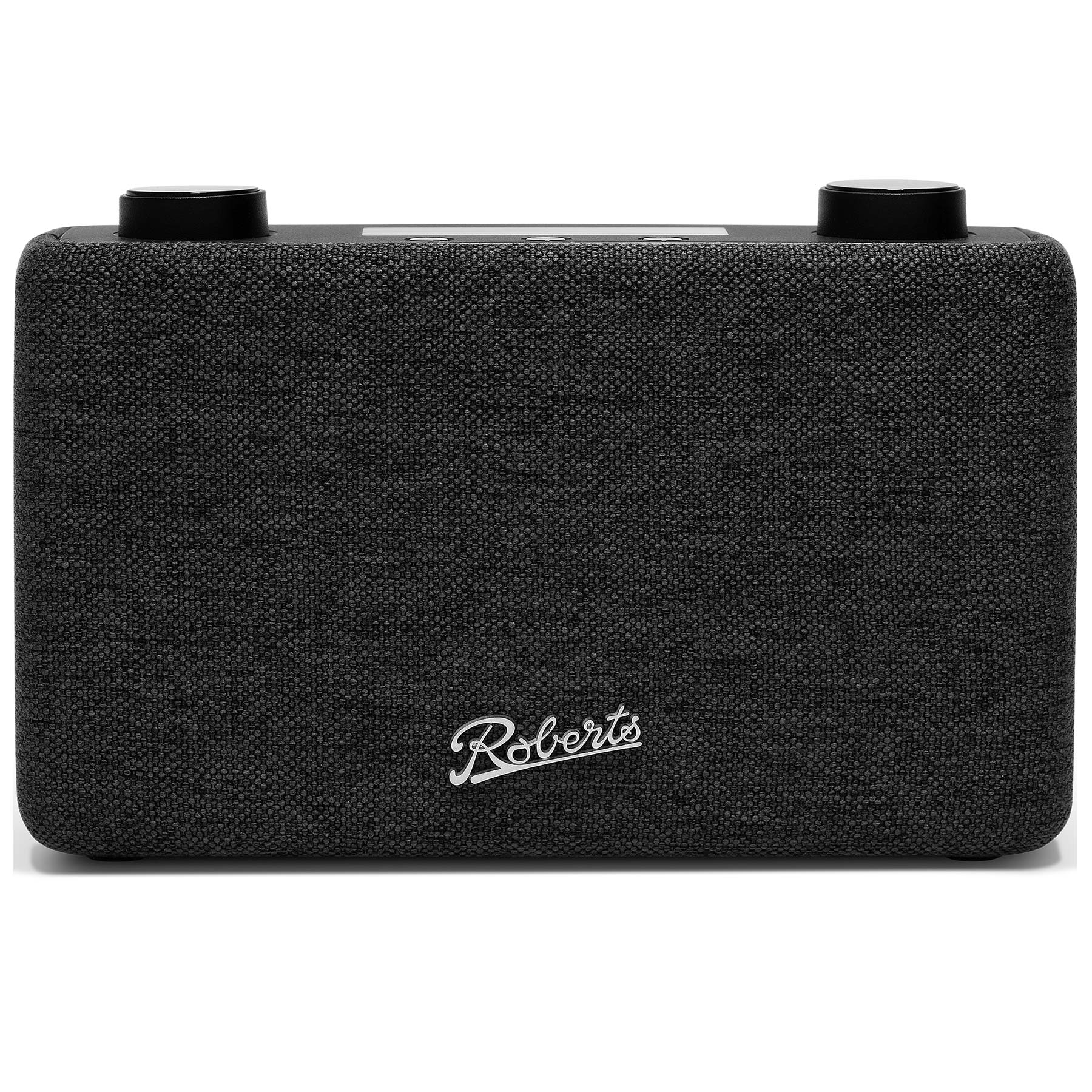 SaleRoberts PLAYFMBK FM MW LW Compact Portable Digital Radio in Black£29.99£34.99
 Roberts PLAY10W£39.99Compare 2 shops
 Roberts PLAY11-BK£49Compare 2 shops
 Roberts PLAY 11 DAB DAB+ FM Portable Digital Radio White£49Compare 2 shops
 Roberts Revival Petite 2 DAB DAB+ Bluetooth Rechargeable Digital Radio Black£99Compare 3 shops
Fred in the Shed's video tests a budget XHDATA radio with a built-in battery, giving another example of the trade-off between a compact set and its power source.
The phone belongs in this picture, but it cannot be the whole picture. Fifty-four per cent of respondents had a power bank; Be Ready specifies a charged one for phones or compatible medical devices. Digital landlines can fail in a power cut. Eligible customers can ask their provider for free backup lasting at least an hour, as our landline switch-off guide explains. Emergency calls from a mobile can use another available network and do not require credit, though a network must be available. Our internet checker shows network signal ratings at an address.
The needs that change the list
Light and a radio are easy to imagine. Warmth, first aid, medication and information become more personal. Be Ready warns that homes can become cold quickly when heating stops and suggests blankets, sleeping bags and warm clothing. A household with enough bedding may only need to gather it where it can be reached. The Cold Weather Payment guide covers help with heating costs, a separate worry from getting through an outage.
The warm-layer grid shows EasylifeEasylifeEasylife is a UK catalogue retailer built around practical products for the home, garden, mobility and motoring. Its range leans towards everyday problem-solving, from heated airer1 current offer · View store → hats, socks and tights for the household whose existing blankets need some help.
Warm layers for a cold house



The first aid list is specific: waterproof plasters, bandages, a thermometer, antiseptic, eyewash, sterile dressings and gloves, tape and tweezers. A boxed kit may cover only part of that list. Hygiene matters too if water is limited: the campaign names hand sanitiser, wet wipes and bathroom products. The following grid pairs a First Aid Manual from  LoveReadingLoveReadingThis is LoveReading, a UK book recommendation site that has championed books since 2005 and opened its own online bookshop in 2022. Expert and reader reviews help you pick your nex2 current offers · View store → with sanitiser and wipes from
 The Beauty StoreThe Beauty StoreThe Beauty Store sells perfume, skincare and haircare aimed at UK shoppers who want branded beauty products for less. It is a practical place to look for fragrances, bath and body Buying guide · View store →.
First aid and hygiene


For medicines, Be Ready says repeat prescriptions should be requested up to five working days before they are needed. People who rely on powered medical equipment need a plan with their clinical team and utility provider, because a generic power bank may not run their device. The Be Ready checklist also asks for instructions for equipment and a list of medicines and doses. These are reasons to settle the plan before an interruption, not reasons to buy a larger standard basket.
Money and memory can fail with the network. The campaign recommends cash in a mix of coins and notes alongside cards, without setting a universal amount. It also asks for important contacts, people to check on, copies of documents and medication details on paper. The power cut number is 105 in England, Scotland and Wales, and 03457 643643 in Northern Ireland. I would write those down with the household's own numbers; a flat phone cannot retrieve its contact list.
The standard list changes again for babies and animals. Be Ready includes ready-to-feed formula because it may not be possible to boil water safely for powder, plus nappies and wipes. It also calls for pet food and bottled water. Anyone caring for another person or an animal will know which daily essentials cannot simply be replaced with the contents of a general kit.
The second poll asks which gap you would tackle first after accounting for the people who depend on your plan.
Where the shopping makes sense
I priced the list at UK shops online in October 2026. The useful route is through ordinary retailers, once the household's existing supplies are counted. Aldi covered the water, most of the no-cook food and the tin opener in the example basket; Argos had the basic radio and power bank; Decathlon had the head torches; St John Ambulance sold a first aid kit. The grids above offer alternatives for specific gaps rather than a second complete list.
I'd skip a ready-made bag for staying at home. EVAQ8's two-person GoBag was £117 and out of stock at the time of pricing. Its two 500ml water rations amount to a litre between two people, against the 18 litres of drinking water the government's calculation gives them for three days. A bag for leaving home has a different job. For a household planning to stay put through a utility cut, paying for that bag still leaves the largest gap to solve.
The water is an ordinary grocery purchase, not specialist equipment. At the time of pricing, Aldi's six-pack of 2-litre bottles was £2.19, while the Asda and Morrisons examples were £2.55 and Sainsbury's was £3. That comparison makes the point without making price the whole decision: the volume to store is harder than the first purchase. The food example at Aldi came to £14.57 for two people, built from beans, fish, chickpeas, fruit, UHT milk and other shelf-stable foods. It is an example of a cupboard, not a menu everyone has to eat.
What the basket costs
For two adults starting without these items, the priced basket came to £76.29 in October 2026. It includes three days of food and the drinking-water quantity rounded up to two six-packs, plus light, radio, phone power, first aid and basic hygiene. This is what went into the total:
| Item | Price | Where |
|---|---|---|
| 24 litres of water (two six-packs) | £4.38 | Aldi |
| No-cook food for three days | £14.57 | Aldi |
| Tin opener | £1.69 | Aldi |
| Two head torches, batteries included | £7.98 | Decathlon |
| FM pocket radio | £9.99 | Argos |
| Spare batteries | £3.35 | Aldi |
| 10,000mAh power bank | £17.99 | Argos |
| First aid kit | £12.60 | St John Ambulance |
| Baby wipes | £0.75 | Aldi |
| Hand sanitiser, 500ml | £2.99 | The Beauty StoreThe Beauty StoreThe Beauty Store sells perfume, skincare and haircare aimed at UK shoppers who want branded beauty products for less. It is a practical place to look for fragrances, bath and body Buying guide · View store → |
| Total | £76.29 |
That total omits delivery for the first aid kit and sanitiser. It also assumes there are already blankets, warm clothes and some cash at home. St John Ambulance listed £7.14 delivery for its home kit, so the table is a priced selection rather than a universal checkout bill. Many households will spend less by using what they already have; households with babies, pets or medical equipment may need more.
The Black Friday guide has this year's dates if a non-urgent purchase can wait. But the campaign's gradual approach is the more useful economy: one missing item with a normal shop, and no special bag bought simply because it says emergency on the label.
A kit that still works later
An emergency cupboard is only useful if its contents still work when needed. Be Ready recommends checking the kit every six months for expiry dates and replacing what has gone out of date. The people in the AskUK discussion who drink stored water and eat the tins before replacing them have a practical answer to waste. The same check is a chance to charge the power bank, see whether the torch lights, and make sure the radio has the right batteries.
For anyone spreading the remaining purchases across normal shopping trips, the Weekly shows the week's deals every Thursday morning.
Vouchernaut Weekly
Deals worth knowing, every Thursday
New guides, real price drops, fresh codes and the sales ahead, every Thursday at 7am. Free.


I would begin with the gap the survey made impossible to ignore: drinking water. Then I would account for cold food, a safe light, a way to hear news and the needs that are specific to the household. The Cabinet Office's two key actions are plain enough, but Storm Austen made the reason for them visible a day after launch. Three days is a manageable plan only if the essentials are there before the interruption starts.
BallparkA daily price game
Higher or lower?
Eleven things from UK shops, the same for everyone today. Does each cost more or less than the one before? Ten quick calls.