

We may earn a commission when you shop through links in this article or on our store pages, at no extra cost to you.
Hearing that someone has died does something strange to you. You want to say something. You're scared of saying the wrong thing. So you end up on a florist's website, because ordering flowers feels like doing something, and it doesn't need any words.
I get why. But the words matter more than the flowers.
What is a sympathy gift?
It's anything you send or do for someone who has been bereaved, to show them you're thinking of them. Usually that's a card, sometimes with flowers or food sent to their home, and often the most useful version is a practical bit of help. It's for the people left behind, and the best ones needn't cost anything at all.
Why is it so hard to know what to send?
Because nearly all of us face it, and nobody gets much practice. There were 568,613 deaths registered in England and Wales in 2024, according to the ONS, and each one leaves family, friends, neighbours and colleagues wondering what to do. In the UK, "what to write in a sympathy card" is searched about 18,100 times a month and "condolence messages" about 33,100, against 5,400 for "sympathy flowers" (Google Keyword Planner, October 2026). Far more people are stuck on the words than on the gift.
Why does getting it right matter so much?
Because a grieving person remembers who reached out. Cruse Bereavement Support, the UK's bereavement charity, puts it simply: people notice who said nothing far more than who said something clumsy. A few honest lines, and an offer you'll actually keep, mean more than the nicest bouquet, while a well-meant gift chosen in a hurry can land as one more thing to deal with.
The short answer: A card with a few honest lines, their person's name and one specific offer of help comes first, and flowers to the house come second, only if the family would welcome them. The Blossomist's Thinking of You letterbox flowers arrive in a slim box with a sympathy card for £33 in October 2026, and MyFlowersMyFlowersMyFlowers is a florist sending hand-tied bouquets across the UK, with same-day options from three hours and next-day or future-dated delivery. Its range runs from compact letterbox4 current offers · View store → delivers sympathy bouquets the same day in London from £54.90. Every bouquet and tribute we list is in the sympathy and funeral flowers collection. The help costs nothing.
What to write in a sympathy card
This is the bit people dread most, and it's smaller than it feels. A sympathy card isn't a writing test. It only has three jobs: saying you're sorry, showing you remember the person, and offering something real.
Something like this works: “I'm so sorry that Maya has died. I keep thinking about the way she welcomed everyone into her kitchen. I can take the dog out on Tuesday if that would help. No need to reply.”
If you knew the person who died, it helps to use their name. A memory is lovely, but only if it's really yours. Cruse says people often find small, specific memories of the person a real comfort. If you never met them, “I'm so sorry, and I'm thinking of you all” is enough. You can ask what they were like another time.
What tends to land badly is anything that tells someone how to feel. “At least she's not suffering”, “time is a great healer” and “I know how you feel” are all lines Cruse suggests avoiding. They guess at someone's grief instead of making room for it.
Swapping stock phrases for something personal
We all reach for the stock phrases because they feel safe, and that's fine. But a small change can turn a formula into something that sounds like you. These swaps come from Cruse's own advice:
| Instead of | Try something like |
|---|---|
| “Sorry for your loss” | “I'm so sorry to hear about your dad” |
| “Let me know if I can do anything” | “I'll pick the kids up on Tuesday and give them tea, if you like” |
| “At least they had a long, happy life” | “I'd love to hear more about their life” |
Everyone says the wrong thing sometimes. Cruse's advice is to say sorry and try to understand how the other person feels. Staying silent is a choice too, and it can hurt just as much.
If you're far away, or can't face a card shop right now, The Blossomist will hand-write your message in one of these cards and post it straight to them. It's your words in their handwriting. They'll also send it blank to you if you'd rather write it yourself.
Sympathy cards they'll write and post for you


Flowers for the home aren't funeral flowers
Flowers are the first thing most of us think of. But there are really two different kinds, and mixing them up is how kind flowers end up in the wrong place.
A bouquet sent to someone's home is for them. It's something to look at in a quiet kitchen during a hard week. Funeral flowers are part of the service, and they follow whatever the family has asked for. Lots of families ask for charity donations instead, and the funeral notice, or whoever's organising, will say.
If the family is happy to have flowers, wreaths and sprays usually go to the funeral director before the service, not to the house. Our sympathy and funeral flowers collection has both tributes and bouquets.
If you send flowers home, gentle works best
When a bouquet does feel right, soft and quiet usually works better than big and bright. These are the four I'd look at first, each for a different reason.
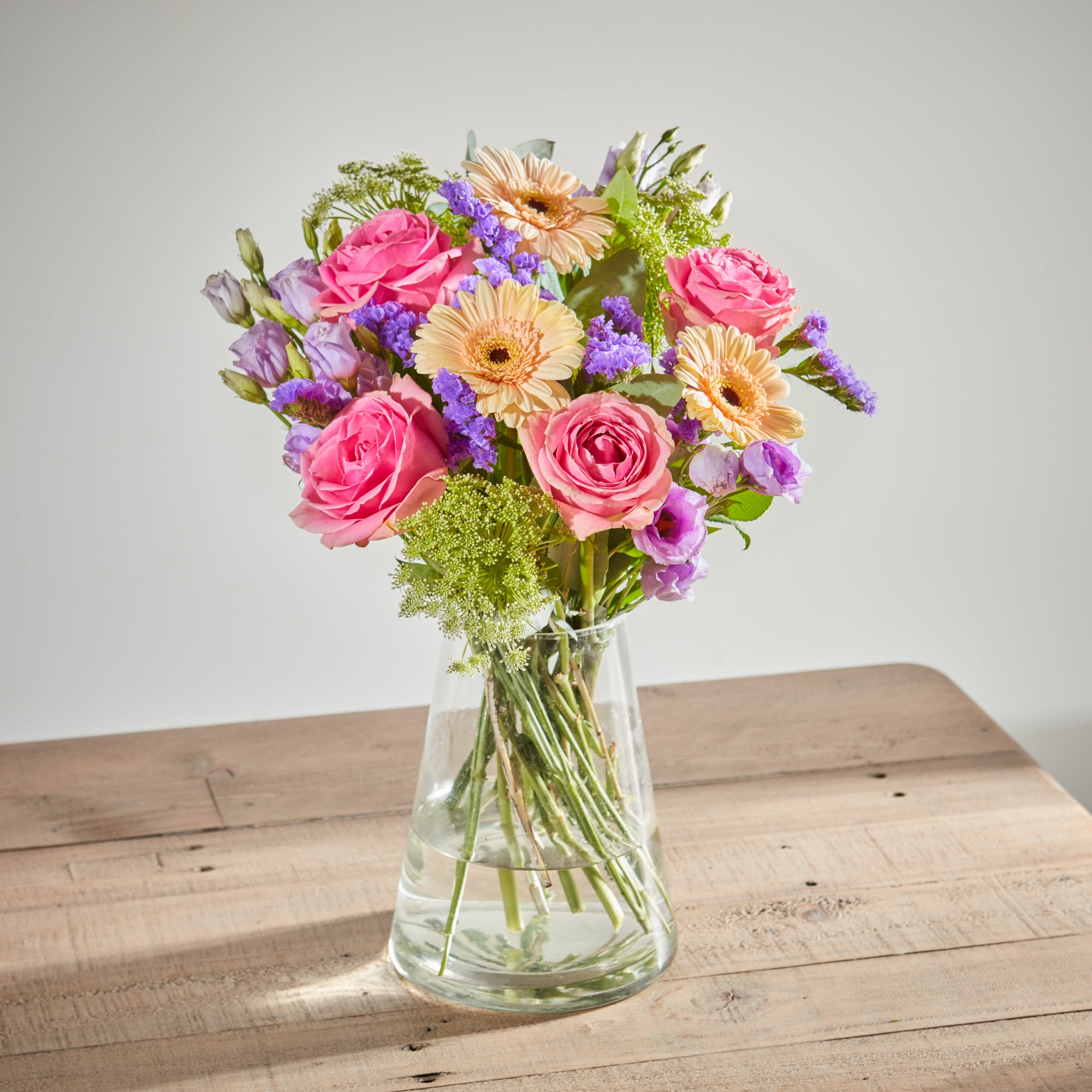
The Blossomist's Thinking of You letterbox flowers come through the letterbox in bud, with a card, so nobody has to answer the door. Inside are white roses, British-grown alstroemeria, waxflower and thlaspi. Arena Flowers' Quiet Solace is a hand-tied bunch of cream germini, soft pink roses and lilac flowers. It's pretty without being cheerful. The Blossomist's white rose bouquet is the more traditional choice. The letterbox flowers guide explains what arrives and whether it fits the door.
Appleyard's white rose plant is the one that lasts. It's still growing on the windowsill after the cards have come down. Some people will love that. Others won't want one more thing to look after right now, and you'll know which your person is.
Flowers to send to the house


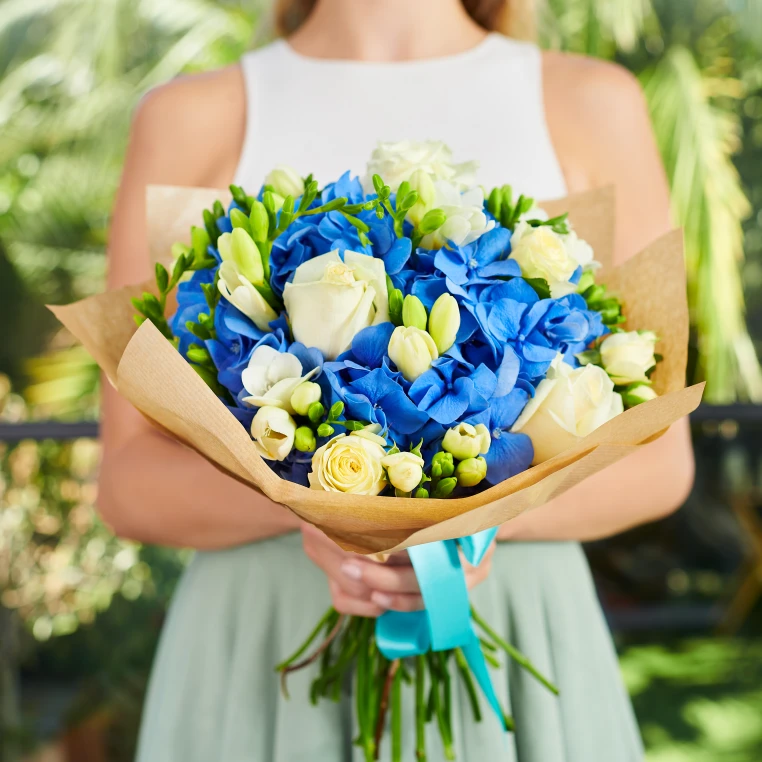
Sometimes the flowers need to arrive today. In London, MyFlowersMyFlowersMyFlowers is a florist sending hand-tied bouquets across the UK, with same-day options from three hours and next-day or future-dated delivery. Its range runs from compact letterbox4 current offers · View store → delivers sympathy bouquets the same day in three-hour slots, and next day elsewhere in the UK. It sends you a photo of the bouquet before it goes, which helps when you won't see it arrive. White Garden is white roses and freesia around a blue hydrangea, and Azure Mist is just blue hydrangea and eucalyptus, about as quiet as a bouquet gets.
Same-day sympathy flowers in London

If there's a cat in the house, the stems matter. Cats Protection says every part of a lily is toxic to cats, and a cat can be poisoned just by licking pollen off its fur. Each listing names its flowers, but florists sometimes swap stems with the seasons, so it's worth asking if you're not sure.
And if the house is already full of flowers, the kindest thing might be something else entirely.
Offering help they can actually say yes to
“Let me know if you need anything” comes from a good place. But it quietly gives a grieving person a job: working out what they need, then asking for it. Cruse points out that grieving people often find decisions hard, and an open offer can feel like too much.
A specific offer is much easier to accept. “I can pick the kids up on Thursday.” “I'll put your bins out this week.” “I'm making a lasagne on Sunday, and I'll leave it on the doorstep.” If they say no, that's fine. If they say yes, you turn up. A small offer you can really keep is better than a big one that falls through.
If you're not sure whether food, flowers or a visit fits the family's faith or customs, someone close to them can usually tell you. That saves the bereaved person from having to explain. Their privacy matters too, so a big branded box on the doorstep isn't always welcome.
Keeping in touch after the first few weeks
Messages pour in for the first few days after a death. Then they stop. Everyone else's life moves on, but theirs doesn't, not in the same way. This is where you can make the biggest difference, and it costs nothing.
Cruse is clear that grief doesn't just pass. Anniversaries, birthdays, holidays and days like Mother's Day can be especially painful. A few reminders in your own calendar help: a month from now, their person's birthday, the first Christmas, the anniversary. When those come round, a short message is enough, like “I was thinking about your mum today”. There's no need for a reply.
For later, everyday check-ins, my thinking-of-you guide has more small ways to show you haven't forgotten.
When it's more than you can help with
Sometimes you'll be the one who notices that someone isn't coping. It's not your job to fix that, but you can help them find people who can.
If, months later, they can't manage everyday life or enjoy anything, Cruse suggests encouraging them to get support. Its free helpline is 0808 808 1677. If you're worried they might not want to go on living, Cruse says asking them directly is more likely to protect them than to do harm. Samaritans answer free on 116 123, day or night.
Supporting someone through grief is heavy, and you matter too. Cruse is there for you as well.
Frequently asked questions
The questions that come up most, answered quickly.
What should I write in a sympathy card?
A few lines saying you're sorry, with the person's name if you knew them, and either a real memory or one specific offer of help. It's best to leave out anything that tells them how to feel.
Should I send flowers to the funeral or to the house?
It depends on what the family wants. Many ask for donations instead of funeral flowers, so it's worth checking first. Flowers sent to the home are a separate, personal gesture, and they're just as welcome a few weeks later.
Is it better to send food or offer help?
It depends on the household. A specific offer, like dinner on Sunday, is often easier to accept than a surprise hamper. If you do send food, it helps to know what they eat and to pick a drop-off that doesn't need anyone to be in.
Is it too late to send a sympathy card weeks later?
No. Support tends to dry up after the first few weeks, and Cruse says remembering someone at hard times later on can be a real comfort. A late card is far better than none.


